
Stages of Colon Cancer: Early Detection Through Screening Colonoscopy Can Save Lives

Colorectal cancer (colon cancer and rectal cancer) is one of the most common cancers in the United States, but it is also one of the most preventable and treatable when caught early. Understanding the stages of colon cancer is crucial because the stage at diagnosis directly determines treatment options and survival rates.
At Vanguard Gastroenterology (Gastro NYC), our experienced gastroenterologists specialize in screening colonoscopy, diagnostic colonoscopy, and polyp removal — the most effective tools for catching colon cancer at its earliest, most curable stages.
In this comprehensive guide, we explain the TNM staging system, what each stage of colon cancer means, common symptoms by stage, risk factors, and why regular screening at a specialized clinic like Vanguard Gastroenterology in Midtown Manhattan and the Woolworth Building can make all the difference.
What Are the Stages of Colon Cancer?
Doctors use the American Joint Committee on Cancer (AJCC) TNM staging system to determine the stage of colorectal cancer. TNM stands for:
- T (Tumor) — How deep the cancer has grown into the wall of the colon or rectum.
- N (Nodes) — Whether the cancer has spread to nearby lymph nodes.
- M (Metastasis) — Whether the cancer has spread to distant organs (such as the liver or lungs).
These three factors are combined to assign an overall stage from 0 to 4. Higher numbers indicate more advanced cancer.
Stage 0 (Carcinoma in Situ)
This is the earliest possible stage. Cancer cells are found only in the innermost lining (mucosa) of the colon or rectum and have not grown deeper.
Survival Rate: Nearly 100% with proper treatment.
At this stage, the cancer is often completely removed during a routine colonoscopy with no need for further surgery.
Stage 1
The tumor has grown into the submucosa or muscularis propria (deeper layers of the colon wall) but has not reached the outer layers or spread to lymph nodes.
Treatment: Usually surgical removal of the affected section. Many patients need no additional therapy.
5-Year Survival Rate: About 90–95%.
Stage 2
The cancer has grown through the muscular layers into the outermost layers of the colon wall or nearby tissues, but lymph nodes are still clear (N0).
Sub-stages (2A, 2B, 2C) depend on how far it has penetrated.
Treatment: Surgery is the main treatment; some patients may need chemotherapy if high-risk features are present.
5-Year Survival Rate: 80–85% for Stage 2A, slightly lower for 2B/2C.
Stage 3
The cancer has spread to nearby lymph nodes (N1 or N2) but not to distant organs.
This is considered locally advanced. Sub-stages (3A, 3B, 3C) depend on the number of lymph nodes involved and tumor depth.
Treatment: Surgery followed by chemotherapy (and sometimes radiation for rectal cancer).
5-Year Survival Rate: 60–75%, depending on the exact sub-stage.
Stage 4 (Metastatic Colon Cancer)
The cancer has spread to distant organs (M1), most commonly the liver, lungs, or peritoneum.
This is the most advanced stage.
Treatment: Systemic therapy (chemotherapy, targeted therapy, immunotherapy), surgery in selected cases, and palliative care.
5-Year Survival Rate: Around 15–20%, though newer treatments have improved outcomes for many patients.
Why Early Detection Through Colonoscopy Matters
The good news is that colon cancer usually develops slowly from precancerous polyps over 8–10 years. A screening colonoscopy can find and remove these polyps before they turn into cancer.
At Vanguard Gastroenterology, we offer both screening colonoscopy (for people with no symptoms) and diagnostic colonoscopy (when symptoms like blood in stool, anemia, or changes in bowel habits are present). During the procedure, our doctors can:
- Visualize the entire colon
- Remove polyps
- Take biopsies if suspicious areas are found
- Often prevent cancer progression in a single outpatient visit
Screening guidelines recommend starting at age 45 for average-risk individuals. People with family history, inflammatory bowel disease (IBD), or other risk factors may need to start earlier.
Symptoms of Colon Cancer by Stage
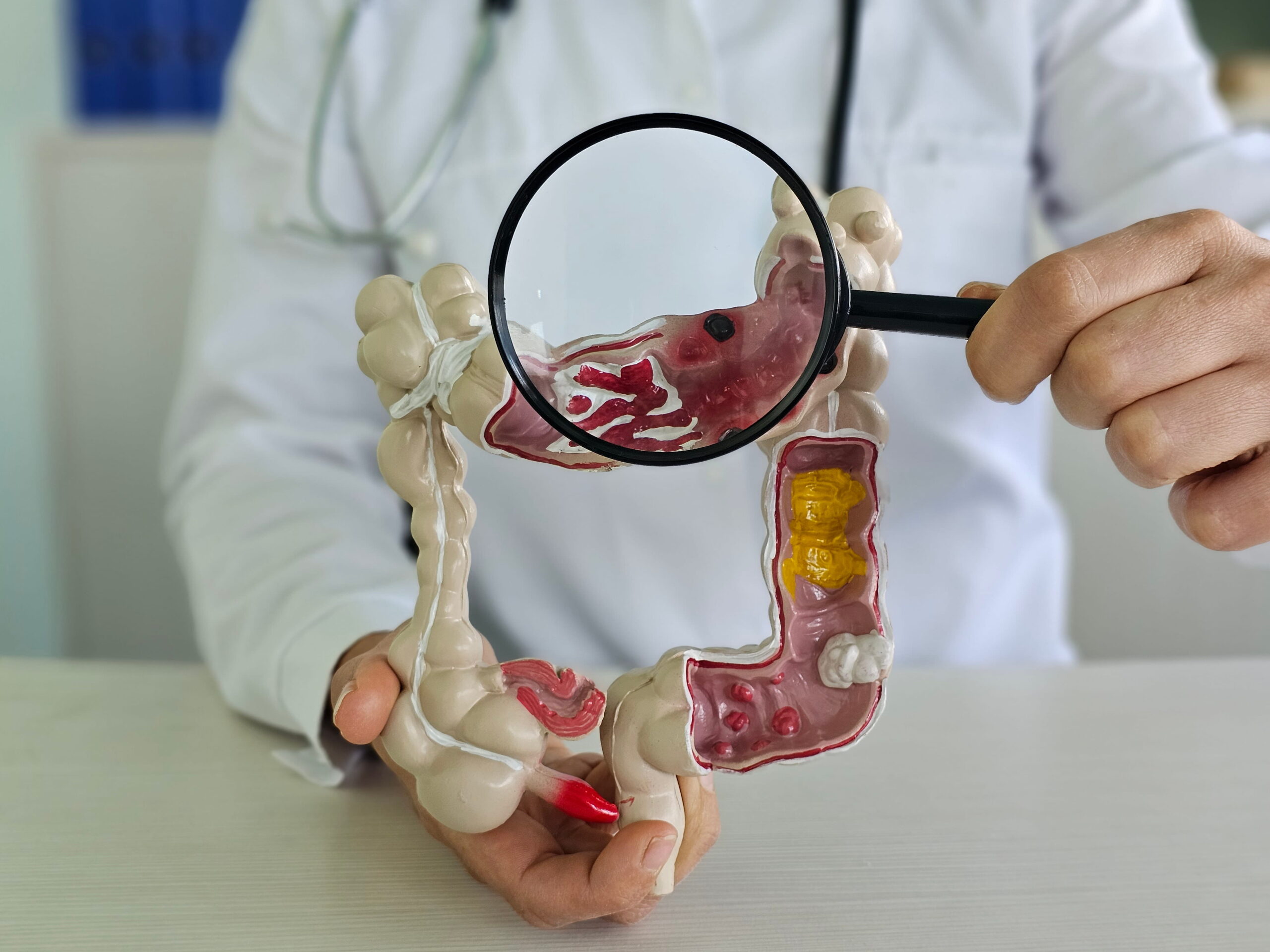
- Early Stages (0–2):
Many people have no symptoms at all. When symptoms appear, they are often mild and easy to ignore:
- Occasional rectal bleeding or blood in stool (bright red or dark)
- Changes in bowel habits (new diarrhea or constipation)
- Mild abdominal discomfort or cramps
- Unexplained iron-deficiency anemia (detected on blood work)
Later Stages (3–4):
Symptoms become more obvious:
- Persistent abdominal pain
- Significant weight loss
- Feeling very tired or weak (due to anemia from chronic bleeding)
- Narrow stools
- Feeling that the bowel does not empty completely
- Black, tarry stools (if bleeding is higher up)
If you experience any of these — especially blood in stool, unexplained anemia, or persistent changes in bowel habits — do not wait. Schedule a GI consult at Vanguard Gastroenterology immediately.
Risk Factors for Colon Cancer

- Age (risk increases after 45)
- Family history of colon cancer or polyps
- Personal history of IBD (Crohn’s or ulcerative colitis)
- Smoking, heavy alcohol use, obesity
- Diet high in red/processed meat and low in fiber
- Previous polyps or radiation to the abdomen
How Vanguard Gastroenterology Helps in Early Detection and Prevention
- When you visit Vanguard Gastroenterology in New York City, your journey typically begins with a thorough GI Consult. Our board-certified gastroenterologists will review your symptoms, family history, and any previous anemia blood work or stool tests.
If needed, we recommend a screening colonoscopy or diagnostic colonoscopy. These procedures are performed in a comfortable, state-of-the-art setting. Benefits include:
- Direct visualization of the entire colon
- Immediate polyp removal (polypectomy)
- Biopsy of any abnormal areas
- Accurate early staging information if cancer is found
We also offer related services such as upper endoscopy, capsule endoscopy (for small intestine evaluation), EUS, and management of conditions that can lead to anemia or bleeding.
Prevention Tips Beyond Screening
- Eat a high-fiber diet rich in fruits, vegetables, and whole grains
- Maintain a healthy weight and exercise regularly
- Limit red and processed meats
- Quit smoking and reduce alcohol
- Know your family history and discuss earlier screening if needed
When to Schedule a Colonoscopy at Gastro NYC
You should consider a screening colonoscopy if you are:
- Age 45 or older (average risk)
- Younger with family history or symptoms
- Experiencing blood in stool, persistent anemia, or bowel changes
Even if you feel fine, regular screening is the best way to stay ahead of colon cancer.
Contact Vanguard Gastroenterology (Gastro NYC) Today
Don’t wait until symptoms become severe. Early detection through colonoscopy dramatically improves outcomes.
Locations:
- Midtown Manhattan: 36 East 31st Street, Suite 701, New York, NY 10016
- Broadway (The Woolworth Building): 233 Broadway, Suite 2750, New York, NY 10279
Call Now: (212) 889-5544
Fax: (212) 481-1089
Hours: Monday – Friday, 8:00 AM – 5:00 PM
Our team is ready to provide personalized care, from GI Consult to advanced endoscopic procedures, helping you protect your digestive health and catch issues like colon cancer at the earliest stage possible.